
 Anglais
 Français
Shopping Cart
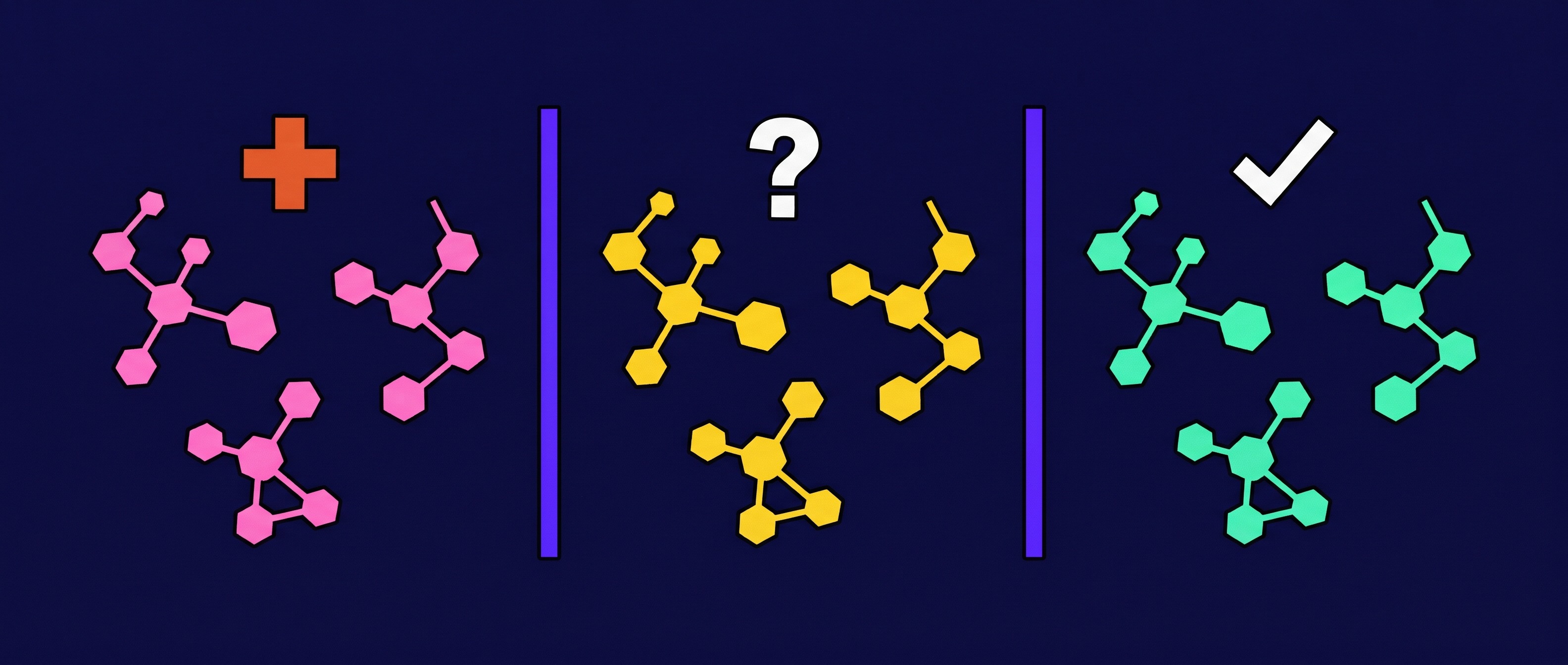
Five years ago the question came down to one molecule and one threshold. Today labels carry abbreviations nobody had heard of, the narcotics list has been amended at least three times on this subject, and very few people know what they are actually holding.
This page puts that back in order. It sets out what these names cover, how the molecules are obtained, and above all where their status stands in France, with the dates. No advocacy and no shortcuts: we describe what the texts say, including where they say nothing.
One useful point before starting: molecules classified as narcotics are not sold on this site. They are described here because you will meet them elsewhere, not because we are offering them.
Natural, semi-synthetic, synthetic: three words, three things
A natural cannabinoid is produced by the hemp plant and recovered as it is: CBD, CBN, CBG and CBC all qualify, and our page on natural cannabinoids covers them.
A semi-synthetic cannabinoid starts from a plant molecule, usually CBD, and transforms it chemically. The starting point is natural, the finished product is not. Nearly every abbreviation discussed here belongs to this category.
A fully synthetic cannabinoid is built in a laboratory without passing through the plant at all. The boundary between the three is more porous than it looks, and commercial vocabulary does not always respect it: the word natural turns up on products that went through several transformation steps.
How these molecules are obtained
The general principle comes down to one idea: start from a hemp extract rich in CBD, which is plentiful and cheap, and alter its structure to produce a different molecule. Hydrogenation, which adds hydrogen atoms, is the most frequently cited process; other transformations yield esters or hydroxylated derivatives.
We will not detail the procedures, and that is not coyness: these operations run in laboratories, with reagents and controls that are in no way domestic. What concerns you is the result, and the fact that the quality of a synthesis is invisible to the naked eye. Only a laboratory analysis says what is inside a product.
The molecules banned in France
Two waves of classification, two dates worth remembering.
Since 13 June 2023: HHC, HHC-O meaning its acetate, and HHCP.
Since 3 June 2024: H2-CBD and H4-CBD, named individually. The same decision adds an entire family, any substance derived from the benzo[c]chromene core, with a precise list of the positions at which that core may be substituted. It is through this family clause that THCP and HHCPO are caught, neither being named in the text. Eight synthetic cannabinoids deriving from no plant compound are added as well, from 5F-CUMYL-PEGACLONE to BZO-POXIZID.
The ANSM justified that classification by psychoactive effects comparable to those of delta-9-tetrahydrocannabinol and by a potential for abuse and dependence, the official grounds of the decision. It took effect ten days after publication.
One clarification that heads off a frequent confusion: THCP, tetrahydrocannabiphorol, and HHCP are not the same molecule. Both are banned, but they belong to different families and were classified on different dates. Seeing one used for the other is common and remains wrong.
THVN10 also sits among the banned molecules. Travers Shop sells none from this list.
The substances excluded from classification
On 4 June 2024 the ANSM updated its decision of 22 May to exclude substances present in trace amounts in industrial hemp. Without that exclusion, a fully compliant flower would have become impossible to classify.
Excluded from classification, therefore: CBNA, cannabinolic acid and precursor of CBN, already excluded beforehand; THCVA and THCV, provided their content does not exceed 0.3 %; and THCA, tetrahydrocannabinolic acid, provided the THC content respects the 0.3 % threshold set by the order of 30 December 2021.
In other words, those four are not synthetic molecules but natural compounds, and their presence in small quantities in a compliant flower is entirely normal. The general framework is detailed in our page on the legality of CBD.
Why the list of bans keeps growing
Between 2023 and 2024 the logic of classification changed. The first decision named molecules; the second targeted an entire chemical family, classifying cannabinoids built on a benzo[c]chromene core, with a list described as explicitly non-exhaustive.
The difference is considerable. Classifying a name leaves room for the next molecule; classifying a structure closes a far wider door. Since then the order of 22 February 1990 has also carried generic wording on tetrahydrocannabinols, their esters, ethers and salts, restated by a decision of 6 February 2026.
Hold on to this above all: the framework moves, and it moves in jolts. A molecule presented as new today can be classified in six months, the decision taking effect ten days after it is published.
The molecules in the grey area
Some molecules are named in no classification decision. That does not make them expressly authorised: their status falls into a regulatory grey area, liable to change, and depends on a reading of the generic wordings that neither the ANSM nor any court has publicly settled.
10-OH-HHC
A hydroxylated derivative of HHC, psychoactive. It is named in no classification decision and does not appear in annexe IV of the order of 22 February 1990. Products containing it are gathered in the 10-OH-HHC category and are sold within the legal framework currently in force.
8-OH-HHC
Same family, same logic: a hydroxylated derivative of HHC, unnamed by the classification texts. Its status calls for exactly the same reservations as the one above.
THCBD
It does not figure among the classified substances. Public information on its origin and its profile is close to non-existent, however, and we would rather write that down than pad the page: we have no verifiable data to offer you on this molecule.
The NXT+ range
Mind the misreading, it is a common one: NXT+ is not a molecule, it is a molecule-enriched range from the Greeneo brand. It comes in two concentrations, 0.5 % for Violette and 1 % for Rouge, across several formats including a resin. Every molecule-enriched product in the catalogue sits in the molecules category.
The summary
What follows gathers the essentials. The dates are those on which each classification took effect.
Banned: HHC, HHC-O and HHCP since 13 June 2023. H4-CBD, H2-CBD, THCP and HHCPO since 3 June 2024, along with the benzo[c]chromene family. THVN10.
Regulatory grey area: 10-OH-HHC, 8-OH-HHC, THCBD. Unnamed by the classification decisions, status liable to change.
Excluded from classification: CBNA; THCV and THCVA below 0.3 % content; THCA provided the THC content respects the 0.3 % threshold. These are natural compounds, detailed in our page on CBN, CBG and CBC, with the CBN and CBG categories.
Enriched flower and natural flower: telling them apart
A natural flower owes its profile to the plant alone. An enriched flower, sometimes called molecule-enriched, is a normally cultivated hemp flower to which a molecule has been added after harvest. The appearance is the same, so is the smell, and that is precisely the problem.
Three reflexes settle it. The label first: an enriched flower says so, and the molecule's abbreviation appears on it. Then the analysis, which shows up what the plant does not produce. And the price per gram, which does not sit in the same bracket. Our page on choosing and storing CBD covers how to read an analysis.
If the label is silent on all three, the question is no longer what the product contains, it is why the seller will not say.
Testing and driving
The question comes up constantly and the answer is short: a positive result is possible. The saliva and blood tests used in roadside checks look for THC, but the molecules described here are chemically close and some cross-reactions are documented. Nobody can guarantee you a negative result, and we are not going to try.
Driving after consuming a psychoactive product is an offence regardless of the molecule's status. The applicable framework is covered in our page on the legality of CBD.
Risks and precautions
These molecules are psychoactive, which separates them radically from CBD. Reported effects vary considerably between people and between molecules, and so does the duration: it is counted in hours rather than minutes, which leaves little room for anyone who takes more too soon.
We give no dosage guidance on these molecules, for a simple reason: no published reference exists to lean on. The adverse effects reported in pharmacovigilance literature run from passing discomfort to more marked reactions, and they concern every product in this family.
Products for adults only, not advised for pregnant or breastfeeding women nor for anyone under medical treatment. Forbidden to under-18s. Keep out of reach of children and animals. The effects and sensations of CBD, which bear no relation to any of the above, are covered in our dedicated page.
Frequently asked questions
Are these molecules CBD?
No, and that is the most widespread misunderstanding. CBD is not psychoactive; these molecules are. They are sometimes obtained from CBD, which does not make them CBD, any more than flour remains wheat. The distinction is detailed in our page on CBD and THC.
How long do the effects last?
Longer than with a CBD flower, and the range varies with the molecule, the dose and the person. No precise duration can be stated seriously, and a precise claim should make you wary rather than reassured.
Why are some banned and not others?
Because classification happens decision by decision, as substances are identified and assessed. A molecule's absence from a list describes the state of the texts on a given date and nothing more, which is exactly why we speak of a grey area.
Going further
Hemp cultivation and production, from seed to jar, are covered in our page on CBD cultivation and production. Natural cannabinoids have their own, devoted to CBN, CBG and CBC.
And if you remember one thing: the abbreviation on the label counts for more than the word CBD printed next to it. Read it, look it up on this page, and ask for the analysis.