

 Anglais
 Français
Shopping Cart
There is one product category where online shops display remarkable creativity about nothing at all: resins. You will be told about tradition, craft and rigorous selection, and you will leave the page with no idea which one to buy.
The vocabulary is not dishonest, it is simply useless for choosing. Craft describes how something was made, not what you will be holding on Thursday evening, and no shop has ever lost a sale by claiming its selection was rigorous.
We are going to go about it differently. First, what a resin is, for anyone arriving here without knowing and unwilling to ask. Then the one criterion that genuinely separates the four references in the Bad Brothers collection.
What a hemp resin actually is
It is the resinous part of the plant, separated from the plant matter and then pressed. Where a flower is the whole bud, a resin keeps only a fraction of the plant, the fraction carrying the concentration. The result arrives as a block or a pressed powder, depending on the method used.
One consequence follows directly: stated figures run considerably higher than on a flower. The resins in this collection sit under 35 % CBD, against under 15 % for the flowers. That does not make a resin four times stronger, it means what carried no concentration has been removed.
Why texture is the only real criterion
The four resins in the collection share an origin, the same Italian indoor growing, the same testing framework. Their aroma descriptions, meanwhile, resemble each other closely enough that two could be swapped without anyone noticing, and that holds true at every shop, ours included.
Texture, on the other hand, can be observed. It decides how you will break it up, warm it and measure it, and it is verifiable from the first time you handle it. It is the one criterion a description cannot fake, so it is the one this guide is built on.
The four textures in the collection
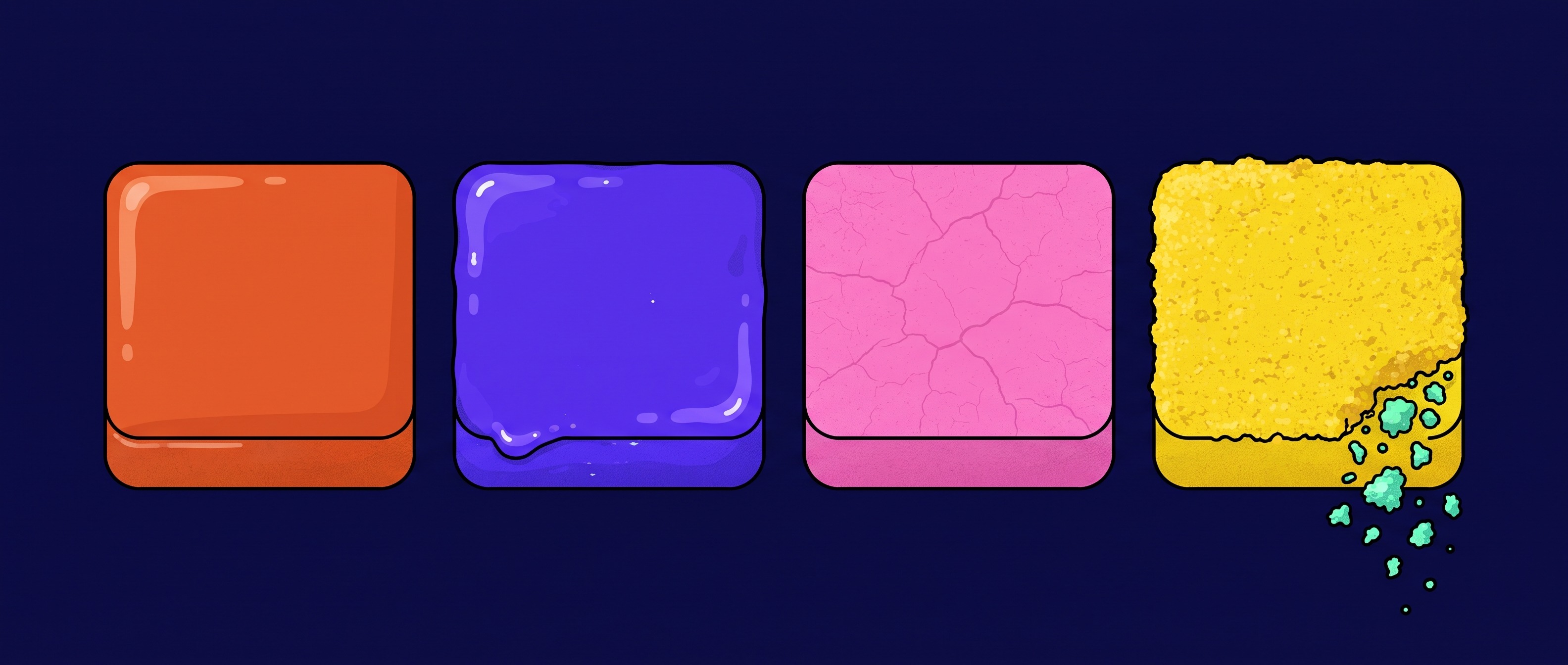
Caramelo, the supple one
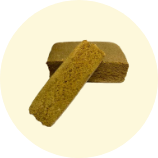
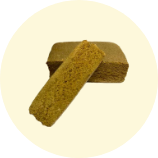
Caramelo is supple and malleable, working between your fingers without resistance and without warming it first. The profile is indulgent, with the lightly caramelised note that gave it the name. It is the easiest of the four to handle, and the one we recommend to anyone who has never touched a resin.
Its drawback is the exact reverse of its strength: it marks easily. A slightly firm press leaves a print, which has no bearing on the product and catches out anyone expecting a rigid block.
Charras, the oily one
Charras is the exact opposite: oily, dense, compact. The profile is earthy and intense, it is the most traditional of the collection, and it asks for a little method. It leaves a mark on your fingers, which is normal on this kind of resin and surprises everyone the first time.
Marocco, the middle ground
Marocco is recognisable by its brown tone. Its handling runs from supple to slightly crumbly depending on room temperature, which makes it the most versatile of the set. The profile is warm and balanced, with no sharp angles. If you do not know where to start, start here.
Pollen, the crumbly one
Pollen is crumbly, light to golden in colour, and the rawest of the four. The profile is green and dry, a long way from Caramelo's indulgent register. It breaks up with no effort, which is convenient, though you need to have seen it once not to assume a storage problem when the bag opens.
What texture changes in use
A supple resin is measured by eye and worked cold. A crumbly one is easier to portion but escapes, and is better prepared over something rather than over the carpet. An oily resin wants warming very slightly before being worked, which puts some people off and bothers nobody once the habit forms.
None of those three situations is better than the others. They match different practices, which is exactly why texture deserves stating plainly on a product page rather than being buried in a paragraph about tradition.
One last element is checked by hand rather than by reading: how it answers to room temperature. A resin that firms up in winter and softens in summer has nothing wrong with it, that is simply how the material behaves. A resin that crumbles when it ought to be supple, on the other hand, has probably aged badly, and that is the one warning sign genuinely worth watching for when a bag opens.
The word premium, and what it covers
We may as well say it: nothing defined. Premium is not a label, not a standard, not a regulated category. It is a commercial word everybody uses, ourselves included, because it is the one people type into a search bar.
What is verifiable comes down to three points: where it was grown, whether a laboratory analysis is available to read, and how consistent it stays between batches. If a shop uses the word without being able to answer on those three, the word is worth nothing. Feel free to run the same test on us.
Storage and the legal framework
A resin holds up over time better than a flower, which does not excuse storing it badly. A container that seals, kept away from sunlight and warm spots, does the job. Park a supple resin next to a radiator and it turns tacky, so awkward to work with; forget a crumbly one in open air and you will meet it again as dust at the bottom of the bag.
On the regulatory side, THC stays under the legal 0.3 % threshold on every reference, and each product page offers its laboratory analysis as a download. Read that document before the description rather than after it.
Which one to start with
If you have never tried one, take Marocco or Caramelo in a small format: they are the two easiest to handle, and you will quickly know whether resin suits you better than flower.
If you already know what you are doing, Charras for the traditional register, Pollen for the rawest. The four of them are gathered in the resin and wax category; the brand page opens onto everything else it makes.