
 Anglais
  Français
Shopping Cart
A complete guide to choosing CBD flowers for beginners
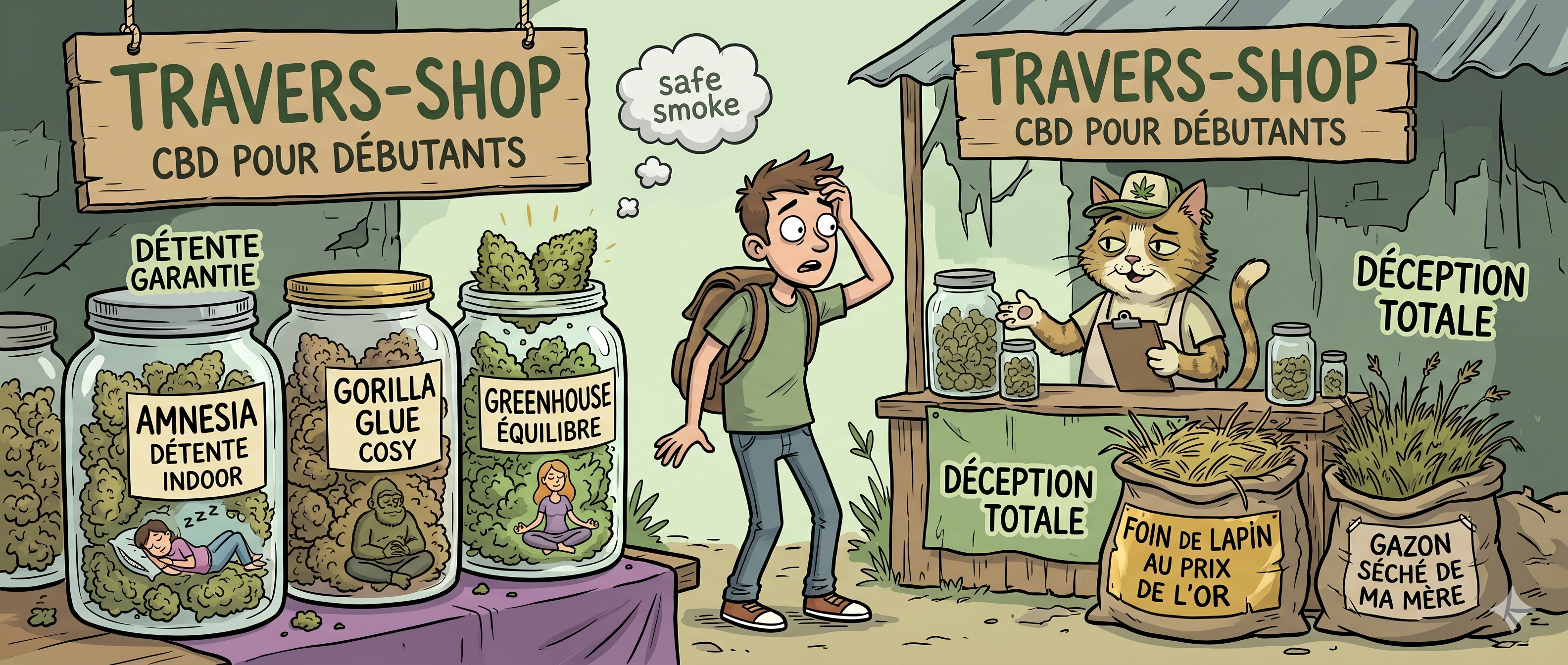
Welcome to the jungle—or rather, the greenhouse. If you thought picking CBD was as simple as buying a carton of milk, buckle up for a cold shower. It’s an art, a science, and occasionally an act of pure faith. The market is currently flooded with products ranging from "divine nuggets" to "rabbit hay disguised as weed." For a beginner, the first rule is not to get blinded by strain names that sound like Mexican wrestlers or tropical storms. We all know why you’re here: your life feels like a forest fire and you’re looking for a botanical fire extinguisher. But before you throw your money at the first baggie you see, take a deep breath (of fresh air, for now).
Choosing your CBD flower when you're a beginner requires a bit of common sense. You need to understand that behind the glittery marketing lies a bunch of molecules ready to interact with your tired little brain. We aren’t looking to see pink elephants here—spoiler alert: that’s not happening, CBD isn't THC's psychedelic cousin—but we are looking to stop you from wanting to strangle your neighbor because they chew their chips too loudly. We want relaxation, flavor, and above all, the feeling that your hard-earned cash isn't literally going up in smoke for nothing. If you end up smoking something that tastes like your old backyard lawn, you skipped a step, and that’s where I step in to save your taste buds and your wallet from imminent disaster.
Understanding different CBD cultivation methods
This is where things get serious. Before you even sniff the product, you need to know where it grew up. In the world of CBD, the plant's housing is more important than your own apartment. There are three main families: Indoor, Outdoor, and Greenhouse. If you want the top shelf, the caviar of plants, go for Indoor. Why? Because these plants live in a five-star hotel with air conditioning, professional-grade artificial lighting, and nutrients served on a silver platter. The result is a dense flower, rich in crystals and aromas. It’s the royal choice for someone who doesn’t want to smoke steel wool. Sure, it's more expensive, but that’s the price you pay to avoid consuming the contents of a municipal compost bin.
On the flip side, Outdoor is the real adventure. These plants grow the hard way, under the sun, wind, and rain. It’s usually cheaper and more "natural" in the wild sense, but the look and taste can sometimes remind you of an old vacuum cleaner bag forgotten in a damp basement. It’s ideal for those on a tight budget or those who love the idea of a plant that had to fight off aphids and hailstorms to survive. Finally, Greenhouse is the perfect middle ground. It’s the upper-middle class of cultivation. You get the benefits of the sun, but the plant is shielded from external aggressions. For a beginner, starting with Greenhouse or Indoor is usually the best way to ensure you aren't disgusted by your first puff of dirt-flavored despair.
Analyzing CBD and THC levels for appropriate dosage
Let’s bust a myth right now: no, a 30% CBD level on a natural flower does not exist. If you see that on a website, either the seller failed biology or they’ve sprayed their flower with CBD isolate like powdered sugar on a cheap carnival waffle. An honest CBD flower, respecting European legislation (less than 0.3% THC), generally oscillates between 4% and 10% CBD. That’s more than enough to relax you without turning you into a mollusk incapable of finding its own kitchen. Craving more is like putting jet fuel in a minivan: it’s useless and just ruins everything.
CBD is all about balance, not raw power. If you’re just starting out, don’t go looking for an atomic "hit." You want something that smooths out the edges of your day, not something that knocks you out so hard you forget your own name or the fact that your rent is due. A moderate level allows you to appreciate the subtle effects: a slight muscle decompression, a mind a bit less cluttered by existential dread, and a sudden urge to watch a documentary about sea otters while being perfectly at peace with the universe. The most important thing is the ratio. CBD works as a team with other cannabinoids and terpenes (the "entourage effect"). This synergy makes the quality of the journey, not just the big number printed on the bag to impress suckers who think "bigger is always better."
Quality criteria for buying CBD flowers online
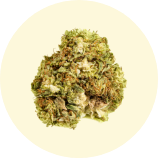
The internet is a wonderful place where you can buy a used kidney or a demonic unicorn plushie in three clicks. For CBD, it's the same—it's the Wild West. To avoid getting scammed by a site designed by a five-year-old on a caffeine high or a notorious fraudster, you need to learn how to visually scan the product. A quality flower should have a certain "look." It shouldn't look like a clump of fairy dust or a dark green rock flattened by a dump truck. You’re looking for "trichomes," those tiny crystals that sparkle and hold all the magic. If the flower is dull, brown, and crumbles into dust the moment you glance at it, run. It’s older than your last New Year’s resolutions or it was dried in a microwave.
Smell is also a vital indicator, though tricky to verify behind a screen (unless you’ve invested in a prototype olfactory smartphone, which I highly doubt). Trust the detailed descriptions. A good flower should have clear notes: earthy, citrusy, fruity, or even cheesy. Yes, "Cheese" is a highly sought-after scent—don't ask, it’s the cannabis world, we like stuff that reeks. If the description is vague, just saying "it smells like a nice plant," be suspicious. A serious seller will talk about terpene profiles like a sommelier talks about a fine Bordeaux, while a charlatan will just tell you "it's fire." Choose your side, but know that your lungs have already made theirs.
Identifying aromas and terpenes in flowers
Terpenes is the fancy word for "what gives it taste and smell." It’s also what steers the effect of your flower, much like the steering wheel of a sports car. Want to sleep like a log and forget you have a 30-year mortgage? Look for Myrcene (earthy, musky scent). Want to be in a good mood and a bit sharper for a never-ending Zoom meeting? Go for Limonene (citrus scent). Choosing your flower is a bit like choosing a perfume, except you don’t put this one behind your ears to pick up people at a club. Well, you could try, but the results would be socially embarrassing and you'd likely end up talking to a plastic palm tree alone.
For a beginner, the so-called "classic" strains are usually the safest bets to avoid a gustatory "bad trip." We’re talking about Amnesia (citrusy, energizing), Gorilla Glue (potent, earthy), or Strawberry (sweet, like candy). These names aren’t just there to look cool or attract primate fans; they indicate a stable genetic lineage. If you start with a strain featuring notes of "burnt old tire" or "diesel" (the "Fuel" profile, beloved by experts), don't come crying to me when your taste buds file a complaint at the International Court of Justice. Stick to familiar, fruity, or floral flavors to tame the beast gently without traumatizing your palate.
Verifying transparency and laboratory analysis
This is the least "fun" part, the one that reminds you of chemistry classes where you spent your time drawing obscene things in the margins of your notebook. However, it’s the only barrier between you and slow poisoning. A serious site must absolutely be able to provide laboratory analyses. Why? Because hemp is a natural sponge. It absorbs everything in the soil: the good nutrients as well as the nasty heavy metals. You’re consuming CBD for your health, not to ingest lead, cadmium, or mercury. If the seller can't prove their flowers are clean, they’re probably growing them on an old nuclear site or in a damp basement next to a fuel leak.
Also, check if the flowers are guaranteed pesticide-free. The goal of CBD is to do you good, to soothe you, not to turn your lungs into a chemical waste storage site for Monsanto. An "organic" or naturally grown flower is always preferable, even if it costs two euros more. We’re in an era of responsible consumption, so don't be a cheapskate when it comes to your own health. Make an effort, read the fine print, check customer reviews—the real ones, not those that all say "Great product, fast shipping" with suspicious typos—and make sure the shop has a physical address or a solid reputation. If the only contact is an occult Telegram account, there's a good chance you'll receive dried Earl Grey tea instead of your precious legal weed.
Usage tips for a successful first experience
Congratulations, you finally have your baggie. You’re holding it in your hands like the Holy Grail or the last surviving sacred relic. Now, what do we do with it? If your first Neanderthal reflex is to pull out a lighter and smoke it with tobacco like a rebellious high schooler behind the gym, stop right now. It's 2026; we’ve evolved; we don’t live in caves anymore. Combustion is bad. It burns the precious molecules, releases carcinogenic tars, and wastes 80% of the potential of your hard-earned flower. Plus, mixing CBD (which relaxes) with tobacco (which is a nervous stimulant and a hard drug) is like hitting the brake and the gas at the same time: it's stupid, goes nowhere, and eventually smoke starts coming out of the hood.
Opt for vaporization instead. It’s clean, it smells nice (well, it smells like a plant, not a forest fire), and it allows you to set the temperature to extract exactly the molecules you want without destroying them. It’s the essential tool for the modern consumer who values their lung health and doesn't want to cough up their lungs every morning. If you’re not into tech, infusion is a great alternative. But beware: CBD is lipophilic. That means it hates water and prefers fat. If you throw your flower into boiling water with nothing else, you’ll just be drinking lukewarm hay-flavored tea with zero effect other than a need to pee. Add a fat source: whole milk, butter, coconut oil, or even a splash of heavy cream. That’s the entry ticket for cannabinoids to actually enter your system and do their job of absolute zen.
Tailoring consumption to your personal needs
CBD isn't an exact science; it’s an intimate and sometimes fickle relationship between a plant and your endocannabinoid system. Everyone reacts differently based on their metabolism, stress levels, and history. What knocks out your 220lb friend who eats bricks for breakfast might have zero effect on you, a tiny 110lb ball of nerves and anxiety. The golden rule to avoid ending up in the fetal position on your couch: start low and go slow. Don’t empty the whole bag in your first session hoping to reach Nirvana in five minutes. You’ll probably just take a 12-hour nap and miss your own birthday or a dentist appointment (which, honestly, might not be a bad thing).
Take a small dose, wait an hour, and observe your sensations with the curiosity of a scientist. Did your shoulders finally drop two inches? Did you stop ruminating about that stupid thing you said to your ex back in 2014? If yes, it’s working. If no, you can slightly increase the dose next time. CBD is a marathon, not a 100-meter dash. By learning your own limits and needs, you’ll get the most out of your flowers. And remember: CBD is there to improve your life, not to become your entire personality. If you start wearing beanies in August, listening to reggae on a loop, and talking to your geraniums, we can't help you anymore—you've crossed over to the dark side of the plant force.
Storage and preservation to maintain potency
You bought quality, you paid the premium because you’re an aesthete, so don't treat your flowers like old pizza leftovers forgotten under the bed. CBD is a fragile, almost temperamental organic material. Its sworn enemies are light, excessive humidity, and heat. If you leave your baggie open on your car dashboard in the August sun, you’ll end up with scentless dried moss with zero therapeutic value. The ideal is an airtight glass jar (like a mason jar, but wash it first—strawberry-flavored CBD is a myth), stored in a cool, dark place. A cupboard works perfectly, ideally the one where you hide the sweets you don’t want to share with your kids or partner.
Some purists—also known as obsessives—use small humidity control packs to keep the flowers supple, sticky, and resinous. It’s the little detail that separates an amateur smoking dust from a true connoisseur who appreciates every terpene as a blessing. A well-preserved flower can keep its properties and its soul for several months. A mistreated flower will lose its punch in a few days, leaving behind a scent of grandma’s closet and an effect as powerful as a glass of lukewarm water with a sugar cube. Respect the plant, treat it with the dignity it deserves, and it will repay you a hundredfold by offering the inner peace you’ve been desperately seeking since the start of this article. On that note, enjoy your tasting, and try to stay at least somewhat productive—or at least don't forget to turn off the oven before drifting into Morpheus's arms.