 Anglais
  Français
Shopping Cart
"Is CBD legal or not?" If you had a euro every time someone asked, you could buy half of Amsterdam. The short answer: yes, CBD is legal in France. The long answer is a little more nuanced, because the law distinguishes between several types of products. We'll untangle it all together, with the real up-to-date rules, so you know exactly what you're allowed to buy, possess and consume. No guesswork and no fairy tales.
Is CBD legal in France?
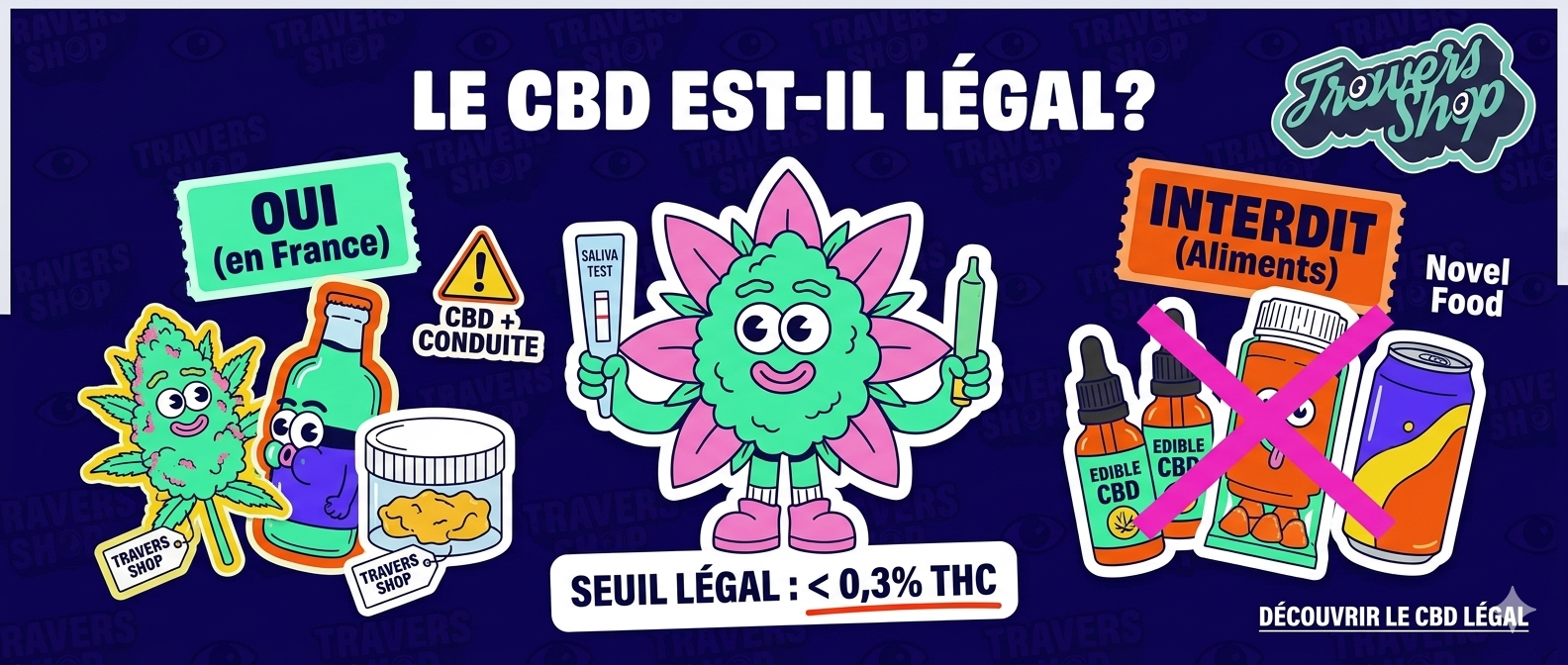
Yes. CBD is perfectly legal in France, provided one simple rule is respected: the product must contain less than 0.3% THC. That threshold, and it alone, marks the border between an authorised wellness product and a banned narcotic. Below 0.3%, no high, no problem. Every serious product on the market respects this limit, backed by lab analyses.
CBD is not a narcotic: the courts say so
This isn't just a seller's opinion. It's a ruling from the highest European court. In the famous Kanavape ruling of November 2020, the Court of Justice of the European Union decided: CBD is not a narcotic, and a member state cannot ban its sale if it's legally produced in another country of the Union. It's the first major official recognition of CBD's non-narcotic status at European level.
This logic is confirmed by the very definition of the word "drug". According to the French authorities, a drug is a substance that alters the state of consciousness and causes dependency. CBD ticks neither of these two boxes: it has no intoxicating psychoactive effect and creates no addiction. Legally as well as scientifically, it is therefore nothing like a narcotic.
Key takeaway: the legal THC threshold in France is 0.3%. It's the red line never to cross, and it's what guarantees a CBD product remains a wellness product and not a narcotic.
Are CBD flowers and resins legal?
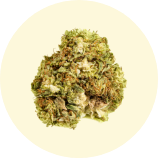
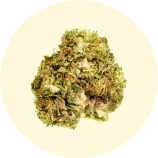
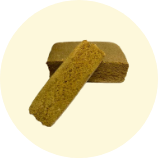
Yes, and it's important to stress this as the subject long caused confusion. Since a decision by the Council of State in December 2022, the sale of hemp flowers and resins is legal in France. For a time, a decree had tried to ban the sale of raw flowers, but that ban was overturned by the country's highest administrative court. The result: you can buy, possess and consume CBD flowers and resins entirely legally, as long as they respect the 0.3% THC threshold.
What's allowed and what isn't
Here's the clear table of what French law currently allows for CBD products respecting the THC threshold.
| Product type | Status |
|---|---|
| CBD flowers | Allowed |
| CBD resins | Allowed |
| CBD e-liquids | Allowed |
| CBD cosmetics | Allowed |
| CBD food products | Banned since May 2026 |
What changed on 15 May 2026: food regulation
Here's the most recent development, and the one that caused a lot of ink to flow. Since 15 May 2026, France strictly applies the European regulation known as "Novel Food" to CBD products intended to be ingested. In concrete terms, edible oils, gummies, capsules, chocolates, drinks and infusions made with CBD can no longer be sold as food.
Be careful to understand this properly: this is not a ban on CBD. It's a bringing into compliance with a European framework that has existed since 2019. The Novel Food regulation requires that a food ingredient with no history of consumption before 1997 obtain European authorisation before being sold as a food. To date, no such authorisation has been granted for CBD, which explains the withdrawal of ingestible products.
The good news: flowers, resins, e-liquids and cosmetics are absolutely not affected by this measure. These categories fall under other regulatory frameworks and remain fully authorised. The essence of the CBD world therefore remains accessible unchanged.
And synthetic molecules?
A distinction must be made between natural CBD, taken directly from the plant, and certain synthetic or semi-synthetic molecules made from chemical precursors. Several of these molecules that recently appeared on the market have been subject to successive bans in France, as they raise specific health questions distinct from those of natural CBD. At a serious retailer, the products offered respect the legal framework in force. If in doubt about a specific product, it's always best to ask.
CBD and driving: the point not to overlook
Here's an important warning. Even though CBD is legal, the traces of THC possibly present in a product (always below the 0.3% threshold) can pass into saliva or blood. And driving after using narcotics is an offence, and a saliva test doesn't measure whether you're "under the influence": it detects the mere presence of THC. As a precaution, it's therefore strongly advised not to drive after consuming CBD, especially smoked or vaporised. Better to be careful than to have to explain yourself before a judge.
In short: a clear framework to consume with peace of mind
CBD is legal in France as long as it respects the 0.3% THC threshold. Flowers, resins, e-liquids and cosmetics are allowed; only ingestible food products are now set aside since May 2026. CBD is legally not a narcotic, the European courts confirmed it. By buying from an official retailer who provides their lab analyses, you have the guarantee of consuming a compliant product with peace of mind. Now you know it all, and you can even correct the misconceptions around you.